Why Everything Feels More Reactive Than It Should
If you’ve been feeling more on edge, quicker to frustration, or stuck in constant reaction—you’re not imagining it.
What you’re experiencing isn’t random, and it’s not a personal flaw.
Modern digital systems are designed to trigger emotion before thought, shaping what you notice, how you feel, and how you respond.
This page will help you understand what’s happening and how to stay grounded within it.
What’s Actually Happening
Most people assume their reactions are personal.
But much of what you feel online isn’t accidental, it’s intentionally shaped.
Social platforms, media systems, and AI are designed to:
surface what triggers you
amplify emotional responses
keep you engaged through reaction, not clarity
Over time, this creates a constant background state of urgency, frustration, or unease.
Not because you’re failing, but because the environment is shaping your responses.
Why This Matters More Than It Seems
When your attention is constantly pulled and your emotions are easily triggered,
you react faster than you think
you feel more drained without knowing why
you lose a sense of control over your own responses
Over time, that becomes your normal.
Not because it should, but because you’ve adapted to the environment shaping you.
There Is Another Way To Move Through This
You don’t need to disconnect from technology or avoid everything around you.
But you do need to be able to:
recognize what’s shaping your responses
create space between stimulus and response
stay steady even when the environment isn’t stable
This isn’t about control in a rigid sense.
It’s about awareness and the ability to stay oriented within what’s happening, instead of being pulled by it.
A practical way to understand what’s happening - and stay grounded
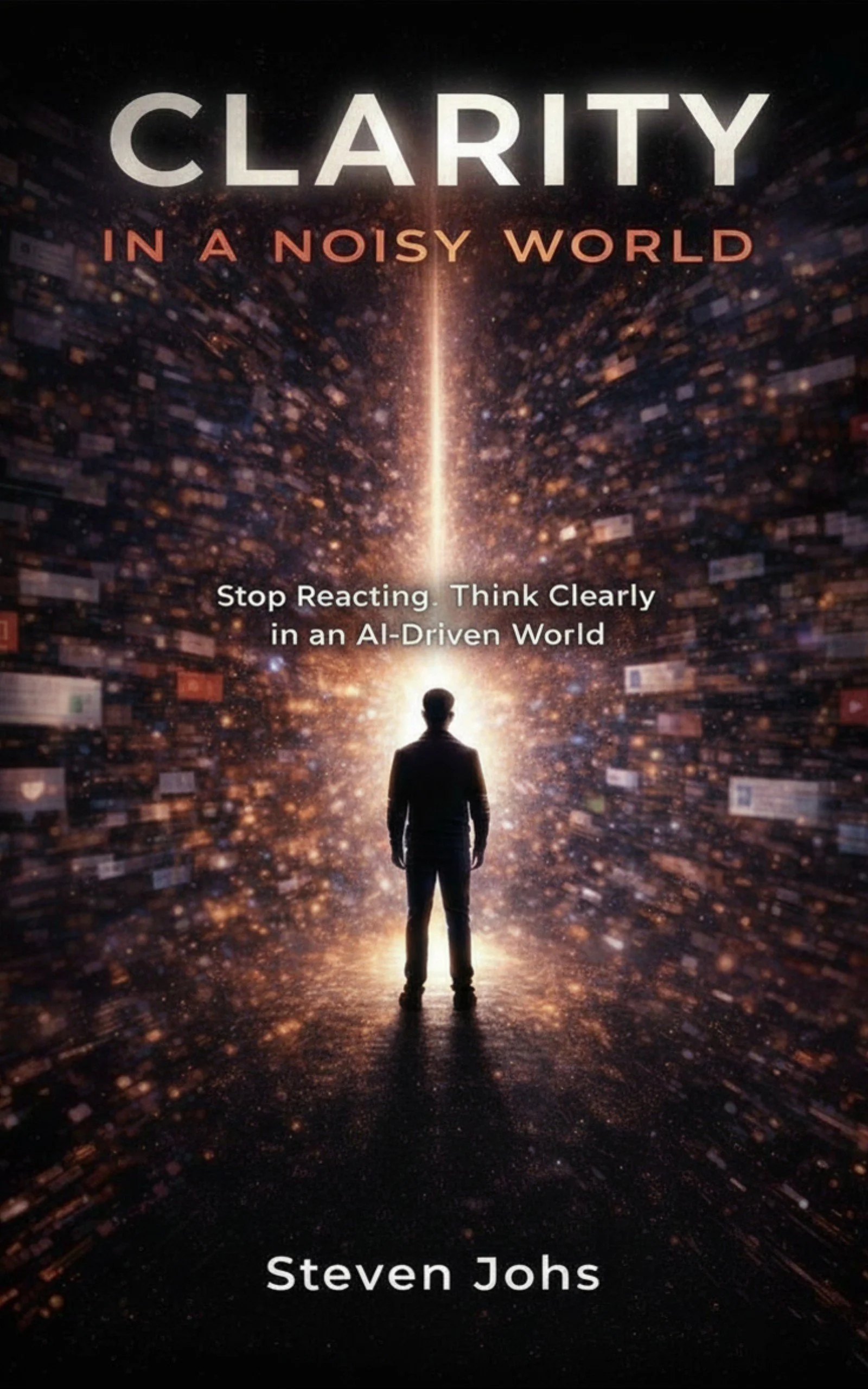
Clarity in a Noisy World is a practical guide to recognizing how modern systems influence your emotional state, and how to stay steady within them.
It’s not about rejecting technology or avoiding the world around you.
It’s about understanding what’s shaping your responses and learning how to respond with clarity instead of reflex.
In the book, you’ll learn how to:
recognize emotional manipulation as it happens
understand why reactive content bypasses calm thinking
slow emotional reflexes without shutting down
protect your attention and emotional energy
If this explains what you’ve been experiencing, the next step is learning how to stay steady inside it.